- Missionary electrification charge from the October billing period, up about 23%
- ₱0.3397per kWh
- Missionary electrification subsidy authorized for 2026, up from about ₱7 billion in 2020
- ₱30.77B
- Average cost of power in NPC-served islands, against ₱5 to ₱8 on the main grids
- ₱18per kWh
- How much the charge could fall if all NPC-served islands had solar and battery, by DOE's estimate
- Half
MANILA, November 4, 2026 — Replacing diesel power plants in the country’s off-grid “missionary” areas, with solar & battery storage, can lower the electricity bills of all grid-connected Filipinos and will ease a fast-growing subsidy burden on government, according to findings released by the Asian Photovoltaic Industry Association (APVIA).
During a technical workshop held with the Department of Energy (DOE), the National Power Corporation (NPC) and the Philippine Solar and Storage Energy Alliance (PSSEA), a report presented by APVIA stated that “By retiring the diesel-run power plants in missionary areas and introducing solar paired with battery, the recurring cost of fuel is cut considerably from the billing of consumers every month.”
The charge on every bill
“Every household pays for island diesel,” APVIA reported. All consumers that are grid-connected pay the Universal Charge for Missionary Electrification (UCME), a line item on the monthly bill that funds the cost of generating power in islands and remote areas not connected to the main grid. Most of it pays for diesel fuel.
The report illustrated further and stated that, “Starting with the October billing period, the UCME rose to ₱0.3397 per kilowatt-hour (kWh) from ₱0.2763 per kWh, an increase of about 23%.”
A household consuming 200 kWh a month now contributes about ₱67.94 every month, or roughly ₱815 a year, to missionary electrification.
The reason is simple - the high cost of diesel generation. According to the DOE, generating power in NPC-served islands costs about ₱18 per kWh on average, against ₱5 to ₱8 per kWh on the main grids. In some remote islands, where fuel must be shipped in, costs reach as high as ₱62 per kWh.
A subsidy climbing fast
The subsidy requirement is climbing fast, the report added. The Energy Regulatory Commission authorized ₱30.77 billion in missionary electrification subsidy for 2026, up from about ₱7 billion in 2020. NPC has now petitioned to collect ₱44.2 billion for 2027, equivalent to ₱0.4405 per kWh — which would raise the 200-kWh household’s contribution to about ₱88 a month.
The burden does not fall on consumers alone. The 2026 national budget also appropriates nearly ₱2 billion in direct subsidy to NPC for the Missionary Electrification Program. Because most of the requirement goes to fuel, it rises every time oil prices spike or the peso weakens, leaving consumers and government exposed to costs neither can control.
Every peso spent hauling diesel to an island is a peso that comes back to Filipino households through the UCME, or to the government through the budget. Solar and battery break that cycle.
 Tetchi CapellanAPVIA
Solar and battery as the practical fix
The workshop identified solar photovoltaic (PV) systems paired with battery energy storage systems (BESS) as the most practical way to cut diesel use.
Solar is now the cheapest source of new electricity in the world, and batteries make that power available after sunset. Hybrid solar–battery–diesel systems keep generators as backup while renewables supply most of the demand.
The savings are well-documented. A Philippine study by Ocon and Bertheau (2019) found that optimized solar–battery–diesel hybrids could reduce levelized electricity costs by about 20% compared with diesel-only systems, and by 20.5% on average in Visayas cases.
Just as important for public finances, solar and battery replace a volatile fuel bill with a fixed, contracted price. Plants can be financed and built by the private sector, so the government pays only for power delivered rather than for fuel whose price it cannot predict.
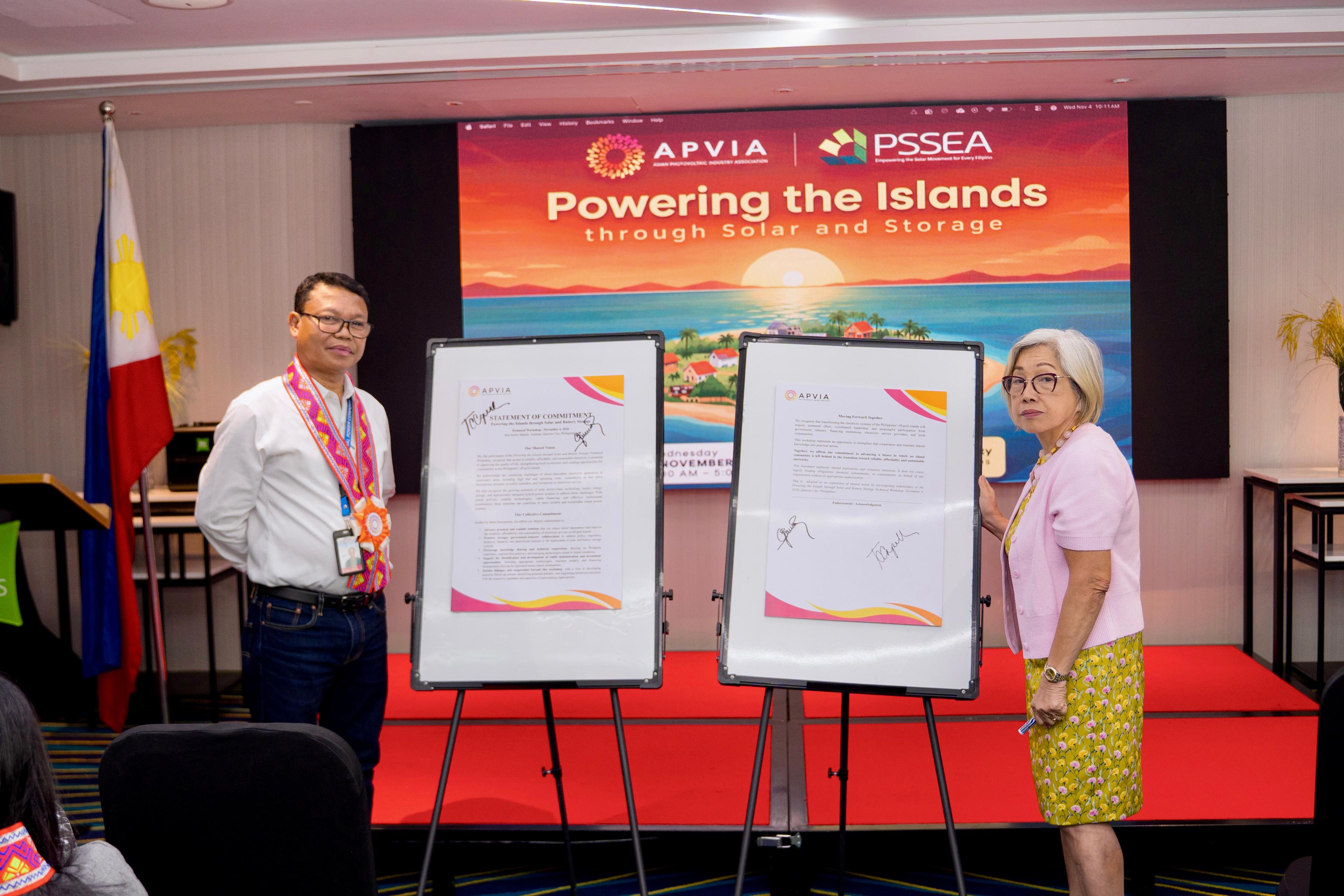
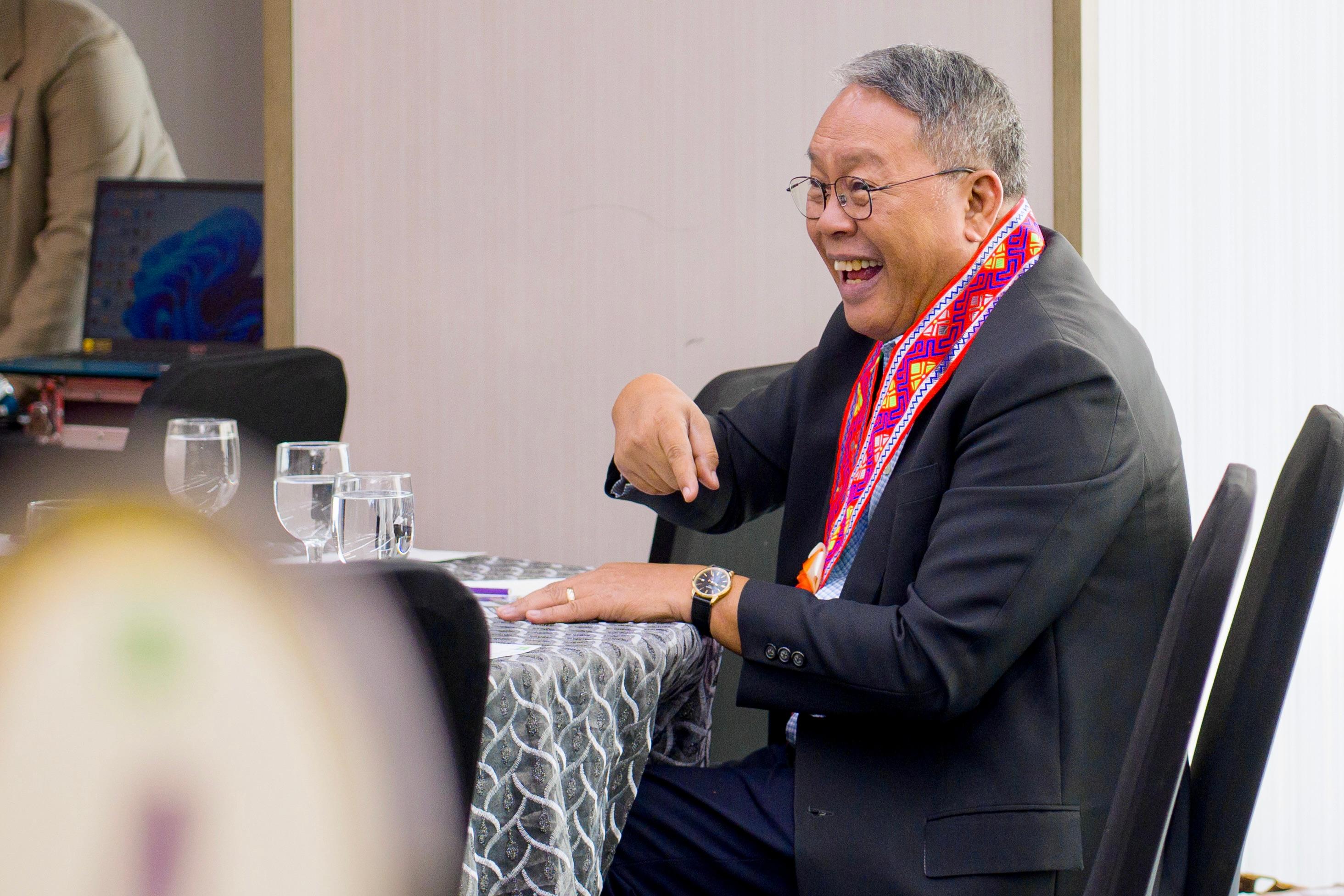
This workshop was organized to give government and industry the opportunity to move beyond discussing the challenges and focus on workable solutions. We needed to understand what could be deployed, how projects could be financed, and what policy and regulatory support would be necessary to make solar and battery storage viable across our islands.
What comes next
The DOE is preparing a dedicated Green Energy Auction for off-grid islands, to be launched in 2027. The first round will cover 20 of the larger NPC-served islands, with a combined annual demand of about 367,000 megawatt-hours, and will procure solar and battery systems to replace diesel plants.
The DOE has estimated that equipping all NPC-served islands with such systems could cut the UCME by half.
Beyond lower bills and a lighter fiscal load, reliable island power can support tourism, strengthen farming and fishing through cold storage and processing, help small and medium-sized enterprises grow, and improve essential services such as health care and schools.
About the workshop
The workshop featured discussions on government policy, international best practice, technology options and Philippine island electrification initiatives. Speakers included Guido Broggi of the Greening the Islands Foundation, Dr. David Butler of Australia’s Commonwealth Scientific and Industrial Research Organisation (CSIRO), and Rommel Hidayat of PLN Indonesia.
Workshop speakers

Rommel Hidayat, Ph.D.
Senior Engineer, PLN (Persero)

Guido Broggi
Head of Strategy, Development & Partnerships, Greening the Islands Foundation

Dr. David Butler
Renewable Energy Researcher & Engineer, CSIRO

Timoteo Diacor
Vice President, Small Power Utilities Group, National Power Corporation

Rene Fajilagutan
General Manager, Romblon Electric Cooperative (ROMELCO)

Charlie Ayco
President, WeGen Energy Philippines
APVIA and its partners called for continued government–industry collaboration to identify viable projects, address financing and regulatory barriers, and accelerate solar and battery deployment in missionary areas — delivering more reliable and affordable electricity to island communities while reducing the cost borne by every Filipino consumer and by the national government.
Help island grids run on sunlight instead of shipped-in diesel
Pledge an island grid with APVIA and be part of replacing diesel across the region’s off-grid communities.