ACE and APVIA Launch Solar Workforce Collaboration at COP31 to Address Southeast Asia’s Clean Energy Skills Gap
Partnership aims to strengthen industry-led training, develop relevant competencies and prepare workers for the region’s growing solar and energy storage industries.
- Energy companies surveyed that face operational bottlenecks from hiring difficulties, according to the IEA
- 1 in 2
- Clean power-generation jobs ASEAN could gain by 2060 over the baseline scenario
- 620,000jobs
- Installation jobs Vietnam’s 73 GW solar target could generate, by APVIA’s estimate
- 135,000jobs
- Jobs the Philippines’ solar deployment targets towards 2030 could create
- 10,000jobs
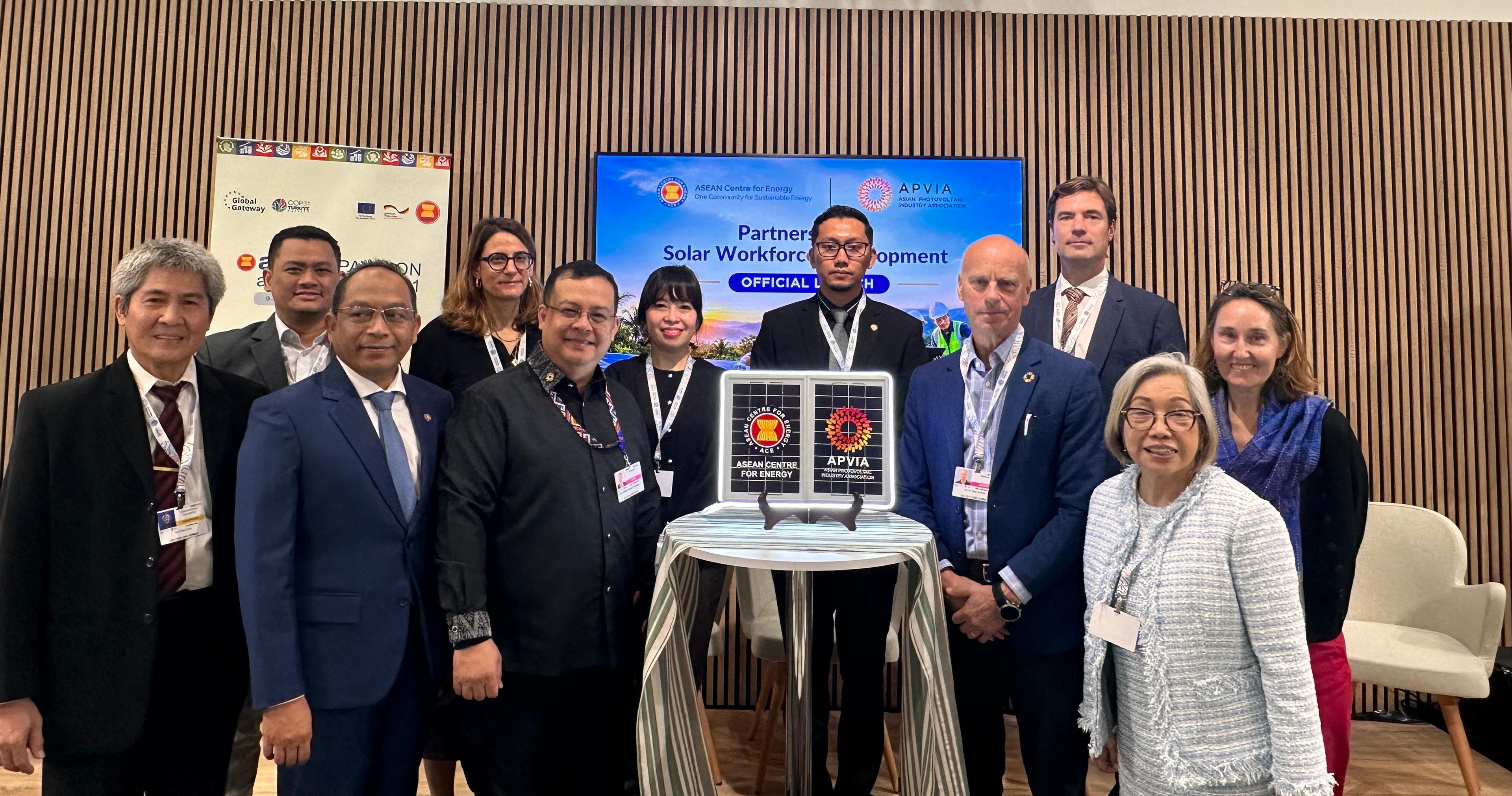
ANTALYA, TÜRKİYE, November 14, 2026 — As solar energy deployment accelerates across Southeast Asia, the availability of skilled workers is emerging as a critical challenge to achieving the region’s clean energy ambitions. The Asian Photovoltaic Industry Association (APVIA) and the ASEAN Centre for Energy (ACE) are working to address this gap through a regional collaboration on solar workforce development, formally unveiled at the 31st UN Climate Change Conference (COP31).
The collaboration builds on a five-year Memorandum of Understanding signed during the ASEAN Energy Summit in Manila and was presented at the ASEAN Pavilion in Antalya, Türkiye, on November 14.
A shortage already slowing companies
The scale of the opportunity is significant. According to the International Energy Agency (IEA), electrification and renewable energy expansion are expected to drive substantial employment growth in Southeast Asia through 2035. However, the agency’s latest presentation at COP31 highlighted that one in every two energy companies surveyed experiences operational bottlenecks due to hiring difficulties. Among the occupations facing shortages are solar PV installers, electricians, grid line workers and battery technicians.
The jobs the transition could create
The IEA also highlighted the longer-term employment potential of the transition. Under the ASEAN Coordinated Transition Scenario in the 9th ASEAN Energy Outlook, clean power-generation operations could gain approximately 620,000 jobs by 2060 compared with the baseline scenario. However, the report cautions that new employment opportunities do not automatically replace jobs lost in traditional energy sectors, underscoring the importance of reskilling, certification and accessible training pathways.
Country-level projections further illustrate the potential. APVIA estimates that Vietnam’s 73-gigawatt (GW) solar deployment target could generate approximately 135,000 installation jobs, while the Philippines’ solar deployment targets towards 2030 could create around 10,000 jobs.
What the partnership will do
Despite this potential, investments in technical training and workforce development need to keep pace with industry expansion. Through the partnership, APVIA and ACE aim to strengthen regional skills assessments, develop industry-aligned competency standards, support training initiatives and explore certification frameworks that can professionalise the solar workforce and improve career opportunities for new entrants.
The collaboration also seeks to strengthen coordination among industry players, governments and technical and vocational education institutions, ensuring that training programmes respond to actual employer requirements. Its scope includes emerging competencies in battery energy storage and grid integration alongside solar PV.
The initiative underscores the importance of ensuring that the benefits of the energy transition extend beyond increased generation capacity to include quality employment, professional development and more inclusive economic opportunities across Southeast Asia.
By connecting regional energy institutions with industry expertise, APVIA and ACE aim to help ensure that the region has not only the solar infrastructure but also the skilled workforce needed to deliver and sustain its clean energy transition.
About APVIA
The Asian Photovoltaic Industry Association (APVIA) is a regional non-profit organisation representing the photovoltaic industry across Asia. It promotes solar energy deployment through regional cooperation, information and academic exchange, technical consultation, project demonstration, quality standards, market services, education and training.
About the ASEAN Centre for Energy
The ASEAN Centre for Energy (ACE) is an intergovernmental organisation representing the interests of the ten ASEAN Member States in the energy sector. It serves as a regional knowledge hub and catalyst for the economic integration of energy systems and sustainable energy development in ASEAN.
Help train and hire the people who build, run and maintain solar
Pledge the people you will train, hire or sponsor, and be counted in the region’s solar workforce.